Field note 001 · September 27, 2026
Cooked, ready-to-eat, or cook first?
Freeze-dried describes water removal. It does not, by itself, tell you whether a meat or poultry product is safe to eat after soaking.
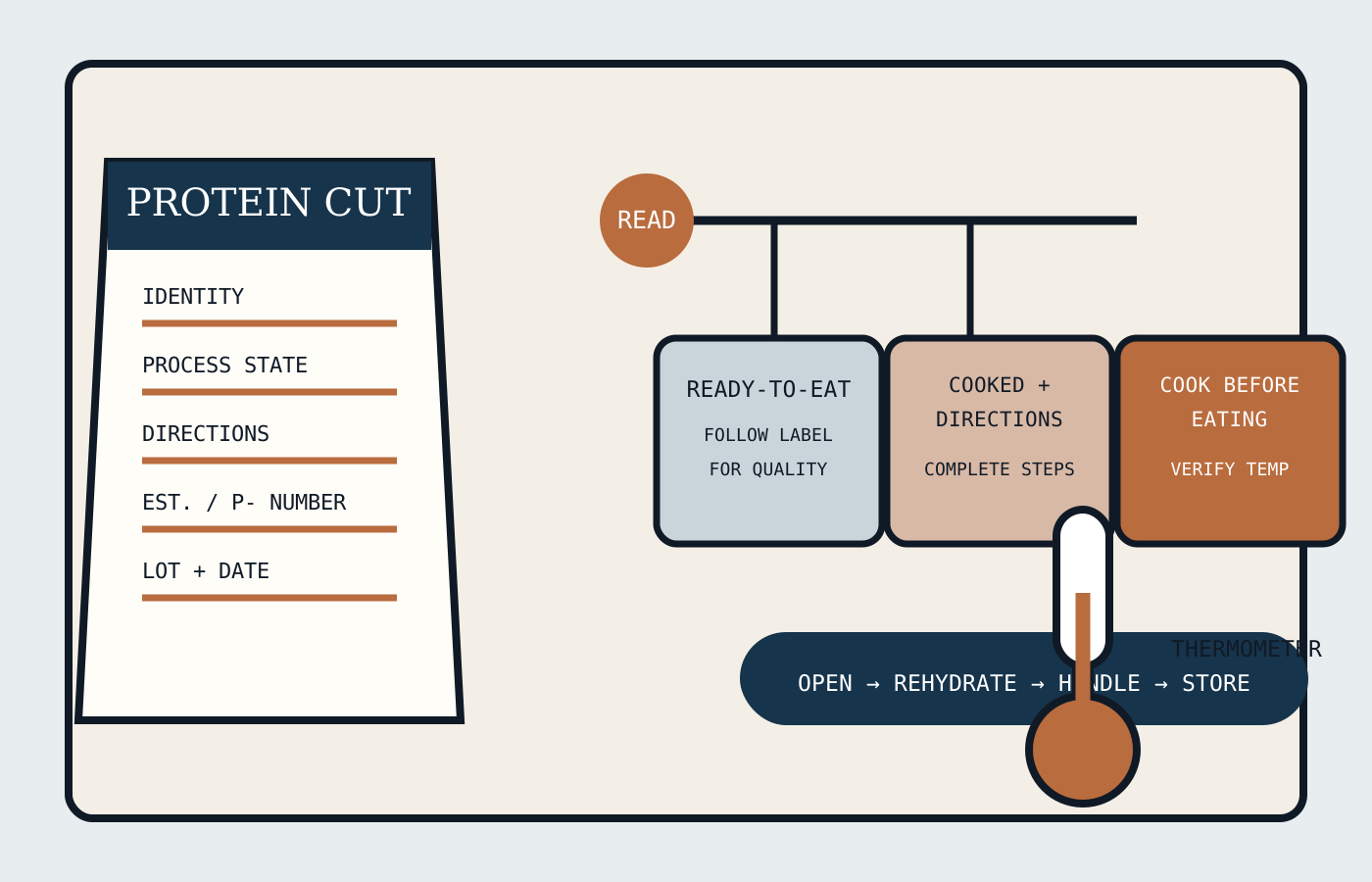
A pouch can say “freeze-dried chicken” while leaving the most important kitchen question to another part of the label: is the product ready to eat, already cooked but intended for further preparation, or raw and required to cook?
Those categories cannot be inferred reliably from color, texture, piece shape, a marketing photo, or the word freeze-dried. Rehydration returns water. It is not automatically a validated cooking step. Read the product name, preparation-state language, safe-handling statement, directions, inspection mark, and after-opening instructions as one record.
Follow the current label and manufacturer instructions for the exact product and lot. If preparation state or cooking directions are missing or ambiguous, do not guess. Contact the manufacturer before serving it. People at higher risk of foodborne illness should follow advice from their health professional and public-health authorities.
Separate three questions the front panel often blends
1. Is it ready-to-eat?
A ready-to-eat product is edible without another preparation step needed for food safety. The package may still recommend rehydration or heating for texture and flavor. “Ready-to-eat” is a product status, not a conclusion a shopper should draw from the fact that meat looks browned or was cooked before drying.
Read the ingredient list and preparation directions anyway. A ready-to-eat protein component can be packaged with other ingredients that need a defined method, and a complete meal may have different instructions than a single-ingredient pouch.
2. Is it cooked but not represented as ready-to-eat?
Some products are cooked during manufacture yet are designed to be heated, simmered, or incorporated into a recipe according to labeled directions. “Cooked” describes something that happened before packaging; it does not always grant permission to skip the package’s final preparation step.
This distinction matters in mixes, meal components, and products whose directions are part of the safety or quality design. Copy the full language rather than reducing the status to a homemade abbreviation.
3. Is it raw or otherwise not ready-to-eat?
Language such as “uncooked,” “ready to cook,” “cook before eating,” “cook and serve,” or a safe-handling statement signals that a validated cooking step is required. Keep the product and anything it touches separate from ready-to-eat food. Rehydrating raw or not-ready-to-eat meat does not make it ready to eat.
Ready-to-eat
Rehydrate or heat only as the package directs. Handle prepared leftovers safely.
Cooked + directions
Complete every labeled preparation step. Do not substitute a shorter soak or warm-up.
Cook before eating
Separate, prepare, cook, verify temperature, and chill according to the label and USDA guidance.
Read the inspection and traceability record
USDA’s Food Safety and Inspection Service says containers of USDA-inspected meat, poultry, and egg products carry a USDA mark of inspection and an establishment number. For meat, the number typically uses the prefix “EST.”; poultry uses “P-”. The establishment number identifies the plant where the product was produced. It is not necessarily the brand name or retailer.
Record the establishment number with the product name, lot or date code, and package photos. That information is useful when checking a recall or contacting the maker. An inspection mark does not tell you to ignore safe-handling or cooking directions; it helps identify the inspected product and establishment.
Use a preparation-state workflow
- Read before opening. Find the statement of identity, species, cut or form, ingredient list, allergen information, net weight, preparation state, directions, storage statements, inspection mark, establishment number, and lot or date code.
- Decide which path applies. Ready-to-eat, cooked with required directions, or cook-before-eating. If the answer is unclear, stop and ask the manufacturer.
- Measure the package method. Record water amount and temperature, portion, rest time, simmer or cooking step, and expected prepared yield. Do not borrow ratios from another product.
- Separate when required. Treat raw or not-ready-to-eat meat and its liquid, utensils, and surfaces as raw. USDA’s basic sequence is clean, separate, cook, and chill.
- Verify cooking with a thermometer. Use the labeled method plus the USDA safe minimum internal temperature that matches the species and form. Color and texture are not reliable safety tests.
- Reset storage after opening and adding water. Follow after-opening instructions for remaining dry product. Refrigerate prepared perishable food promptly and label leftovers.
Match the temperature to the species and form
USDA instructs consumers to measure minimum internal temperature with a food thermometer before removing food from the heat source. The safe minimum differs for whole cuts, ground meat, and poultry.
| Product type | Minimum internal temperature | Rest or note |
|---|---|---|
| Whole cuts of beef, pork, veal, and lamb | 145°F / 62.8°C | Rest at least 3 minutes |
| Ground beef, pork, veal, and lamb | 160°F / 71.1°C | Measure the center |
| All poultry, including ground poultry | 165°F / 73.9°C | Includes chicken and turkey |
| Casseroles and leftovers | 165°F / 73.9°C | Verify the food throughout |
A pouch labeled “beef pieces” may not tell you whether the pieces came from a whole cut or a comminuted or formed product. The label and manufacturer documentation need to resolve the form. When pieces are small, follow the thermometer maker’s instructions for thin foods and check the relevant thickest portions. USDA notes that thin meat pieces can be checked from the side so the sensing area reaches the center.
Do not use water temperature, soak time, or the appearance of steam as a substitute for the finished food’s internal temperature when cooking is required. Likewise, do not impose a raw-product cooking routine on a ready-to-eat item when its own instructions specify a different preparation.
Storage has three separate clocks
Unopened
Use the maker’s unopened storage conditions and date wording. USDA explains that freeze-drying removes water and that freeze-dried foods depend on moisture-proof, hermetically sealed packaging. A damaged seal, puncture, swelling, leakage, missing label, or uncertain history needs manufacturer guidance or disposal—not a taste test.
Opened but still dry
Opening exposes the food to moisture and oxygen. Follow the product-specific direction for resealing, refrigeration if any, time after opening, and handling an oxygen absorber. Do not publish a generic “use within” period unless the manufacturer supports it for that exact product.
Rehydrated or cooked
Once water is added, manage the product as prepared perishable food. USDA advises refrigerating leftovers promptly and reheating leftovers to 165°F. Use shallow containers for faster cooling when appropriate, keep refrigerator temperature at 40°F or below, and follow any shorter package limit.
Build a one-package verification record
Copy, do not infer
- Brand and exact product name
- Species, cut or form, and ingredient list
- Ready-to-eat, cooked, raw, or cook-before-eating language
- USDA inspection mark and establishment number
- Lot code and date wording
- Dry net weight and maker-stated prepared yield
- Water, time, cooking, and thermometer instructions
- Unopened, after-opening, and prepared-food storage
- Manufacturer contact and recall-check date
This record is more useful than a broad category claim because product formulations and instructions can change. Photograph the entire pouch when it enters the pantry. If a recall occurs, compare the product name, establishment number, package size, dates, and lot information with the official notice.
A listing standard for this preview catalog
Freeze Dried Cuts currently publishes unbranded specification briefs. Prices, inventory, checkout, branded product claims, and availability remain disabled until supplier authorization and current product documentation are verified. A future listing must state preparation status in plain language near the product name, reproduce the maker’s directions accurately, and show the inspection and traceability information needed to identify the package. “Just add water” is not enough.
Sources
Reviewed September 27, 2026. Package directions and manufacturer documentation control the specific product.